
A better way to have the hardest conversation in oncology
TrialTalk gives clinicians a clear way to present treatment options, including clinical trials, so patients can choose with confidence.
COMING SOON: ELIGIBLE FOR CE CREDITS
Interested in licensing this course for a department or organization?
It’s not just you.
Even the most experienced clinicians enter these visits under intense pressure: limited time, high emotion, and complex choices—all at once.
Without a clear conversation structure, critical elements can be missed.

Where conversation breaks down:
Not all appropriate options are presented consistently
Clinical trials are sometimes skipped, even for eligible patients
Patients may agree in the moment without fully understanding what participation entails
Early drop-off happens when expectations aren’t clear

The result:
Patients leave uncertain.
Clinicians leave unsure they covered everything.
And opportunities—for informed decisions and appropriate trials—are lost.
For patients
✔ Clear understanding of all appropriate options
✔ Time and space to ask questions
✔ Confidence that the decision aligns with their values
✔ Fewer regrets, fewer surprises, better follow-through
Better tools → Better Conversations → Better Outcomes
Better tools.
Better Conversations. Better Outcomes.
For Clinicians & Institutions
✔ Consistent, repeatable approach to high-stakes conversations
✔ Reduced cognitive load during emotionally demanding visits
✔ Improved trial enrollment and retention
✔ Stronger documentation of informed decision-making

What is TrialTalk?
In clinical practice, treatment discussions are high-stakes and often inefficient. TrialTalk, developed by oncologist and communications scientist Dr. Toby Campbell, provides a clear framework to remodel these conversations to be faster, more authentic, and more effective.
While specifically optimized for oncologists, this course is designed for any physician who routinely navigates complex decision-making with multiple treatment options, especially those who present clinical trials as a viable path for their patients.
COURSE OBJECTIVES
Through this course, you will build the capacity to:
Streamline communications with patients and their support network about goal-concordant healthcare decisions.
Generate the diagrams that clearly and concisely convey complex treatment paths.
Adapt the TrialTalk method with confidence to fit your own unique clinical practice.
TIME COMMITMENT
You will complete this training in approximately 1.5 hours.
Video Instruction: 52 minutes
Action Planning & Exercises: 20–30 minutes
This training is eligible for # CEU credits
Built on Evidence, Tested in Practice
When clinicians use structured communication approaches, patients demonstrate higher understanding, greater confidence in decision-making, and more consistent follow-through.
"You absorb so little, as a patient, during these visits…[The TrialTalk method] makes these visits less intimidating."
– Patient participant
"I found it really helpful in those situations, where you’re really walking into a situation where […] you can’t even guess what the patient might choose, and you just want to make sure you’re laying everything out objectively."
– Physician participant

Bring clarity and consistency to your toughest conversations.
COURSE OVERVIEW
-
Introduces TrialTalk as both a framework and a method for decision-making.
Explains the two interrelated components: the pen-and-paper diagram (the blueprint) and the conversation process (walking through the rooms).
10 Minutes
-
Learn the six elements of the diagram: preparation, documenting "the bad news," labeling treatment options, descriptive details, efficacy data, and labeling your recommendation.
Interactive Learning: Concludes with reflection questions designed to deepen your understanding of the diagram's most important aspects, such as documenting "bad news" first and selecting the right efficacy measures.
12 Minutes
-
Master the five-step flow: Prepare yourself, break the "bad news," explain the three treatment options, deliberate with the patient, and make a recommendation.
Learn why presenting "No Treatment" (Best Supportive Care) first is a critical practice change that establishes a baseline for prognostic awareness.
Interactive Learning: Features practice exercises where you will write your own conversation questions to facilitate deliberation and help patients weigh pros and cons.
15 Minutes
-
Explore in-depth case studies using the TrialTalk method, including metastatic and curable disease contexts.
Create a personalized Commitment to Action plan and clinical practice plan to integrate the method into your clinic.
15 Minutes

COURSE FEE INCLUDES:
On-demand video training content
Practical examples & language guidance
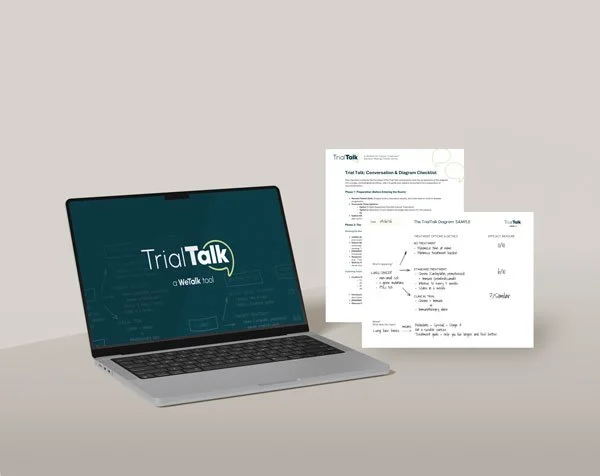
TrialTalk Diagram Template: A blueprint for patient meetings.
Self-Assessment Rubric: Assess your diagrams and conversations against proven principles.
Quick-Reference Checklist and FAQ: Streamlined guides for common clinical scenarios.
Course Fee: $175
COMING SOON: ELIGIBLE FOR CE CREDITS

Meet your Instructor
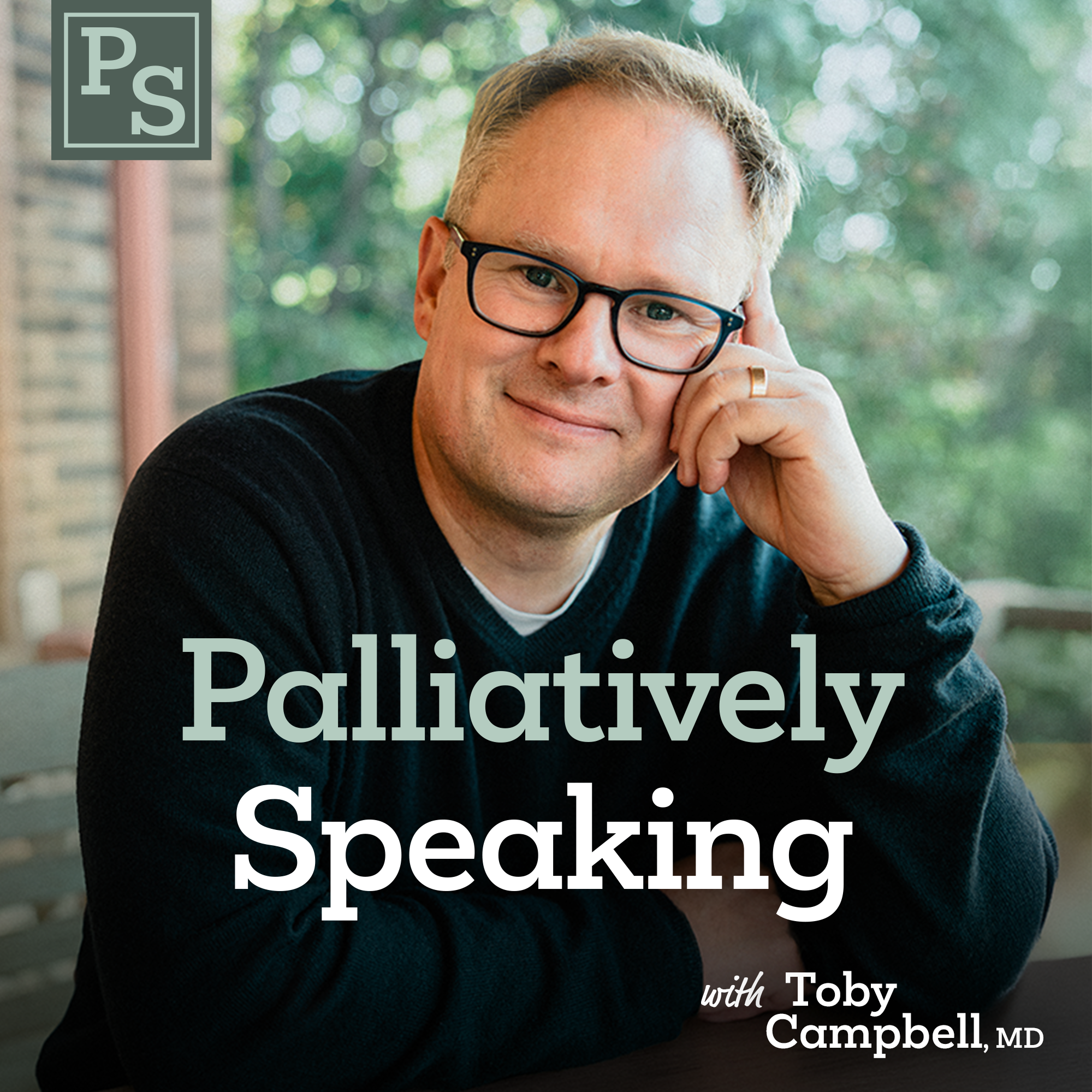
Dr. Toby Campbell, is a palliative care and oncology physician who has spent decades at the forefront of life’s most complex conversations, guiding countless patients and families through moments when words matter most. His work reveals how structure, empathy, and clarity can transform decision-making in moments of uncertainty.
Through WeTalk Labs, he’s turning those insights into scalable programs, trainings, and tools that create the conditions for better conversations—across medicine, organizations, and everyday life.
In Conversation
Toby also hosts two podcasts exploring how we navigate complex decisions with clarity and care.

Latest News